
You’ve made a sesame salmon stir fry before. But you’ve never made it like this. I’m about to show you the one move that changes everything.
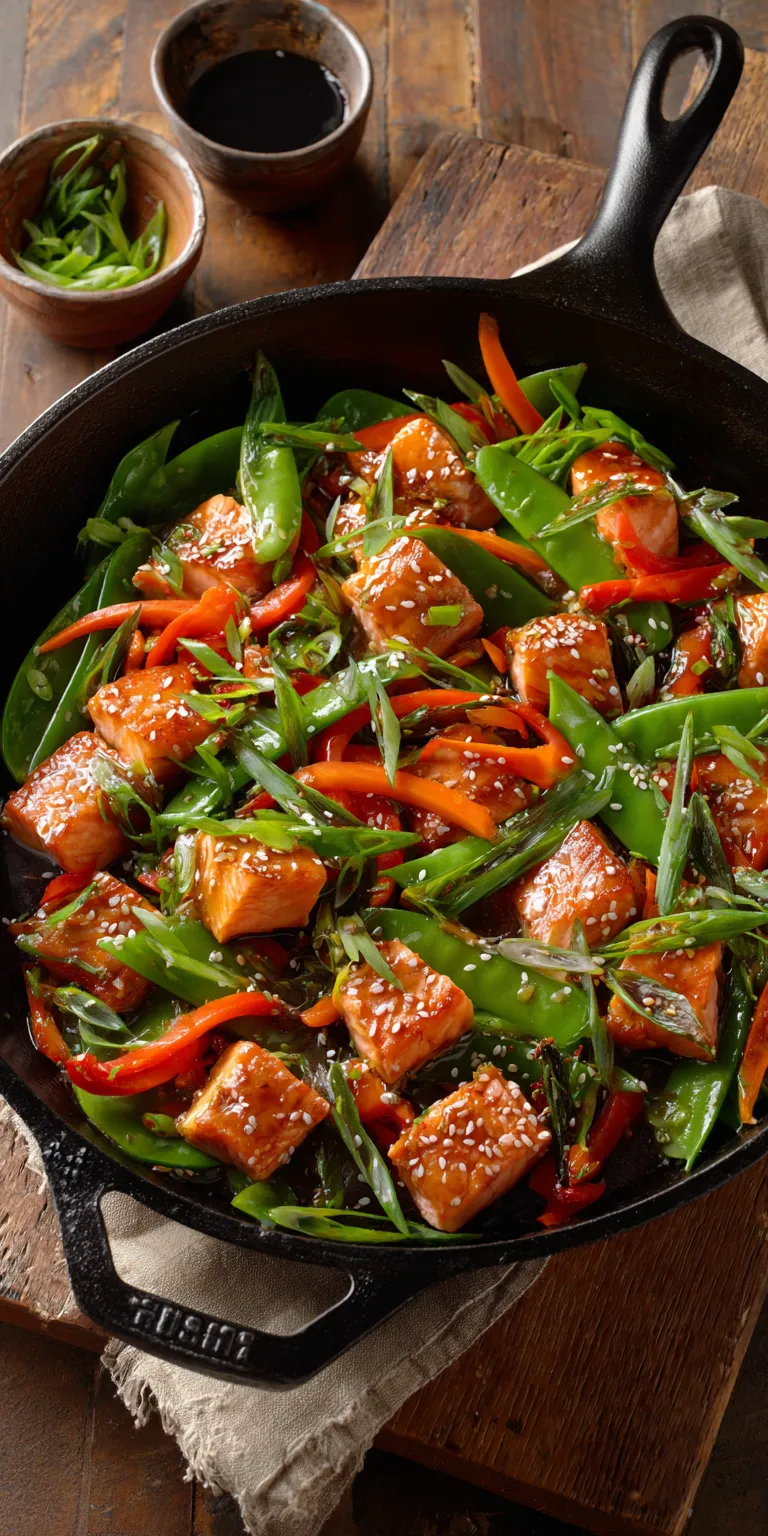
This Sticky Sesame Salmon Stir Fry is a weeknight hero, much like a classic keto stir fry in its speed and satisfaction. It feels fancy but comes together fast. Most recipes get the sauce wrong. They make it too thin or too sweet.
We’re fixing that today. I’m sharing my exact method for a sauce that clings perfectly. It creates a glossy, restaurant-quality coat on the salmon and vegetables. Get ready to see your wok in a whole new light.
Recipe Overview
Here’s the quick look at what we’re making. This is your roadmap to a flawless dinner.
- Cuisine: Asian-Inspired
- Category: Main Course
- Prep Time: 15 minutes
- Cook Time: 10 minutes
- Total Time: 25 minutes
- Servings: 4
The Secret Ingredient That Makes All the Difference
It’s not in the sauce. It’s what you do to the salmon itself. The secret is a cornstarch dusting.
Most people just sear the fish. We’re going to give it a light, even coat of cornstarch first. This creates a delicate crust that locks in moisture.
More importantly, it gives the sticky sauce something incredible to grab onto. The result is a caramelized, textured bite you won’t get any other way.
Why This Method is Better (My Pro-Tips)
I’ve tested every variable for this dish. My approach skips the common pitfalls and focuses on flavor building.
First, we cook the salmon separately from the veggies. This prevents steaming and gives you perfect sear on both. Second, we build the stir fry sauce in the empty wok after the salmon.
Sticky Sesame Salmon Stir Fry Recipe
The “Upgraded” Ingredient List
The Pro-Method (Step-by-Step)
Notes
Enjoy your homemade Sticky Sesame Salmon Stir Fry Recipe!
Nutrition Information
This lets the sauce reduce and thicken with all the delicious browned bits from the fish. It’s a flavor bomb waiting to happen. We add everything back at the very end just to coat and warm through.
The “Upgraded” Ingredient List
Every component here has a job. Use these for the best results. The quality of your sesame oil is non-negotiable.
- 1.5 lbs skinless salmon fillet, cut into 1-inch cubes
- 3 tbsp cornstarch
- 3 tbsp neutral oil (like avocado or grapeseed)
- 8 oz snap peas, trimmed
- 1 red bell pepper, thinly sliced
- 4 cloves garlic, minced
- 1 tbsp fresh ginger, grated
- 4 green onions, sliced (whites and greens separated)
- For the Stir Fry Sauce:
- 1/3 cup low-sodium soy sauce
- 1/4 cup honey or maple syrup
- 2 tbsp rice vinegar
- 1 tbsp toasted sesame oil
- 1 tbsp sriracha (optional, for heat)
- 2 tsp cornstarch mixed with 1 tbsp water
- For Serving: Cooked rice or noodles, extra sesame seeds, and green onion.
The Pro-Method (Step-by-Step)
Follow these steps in order. Mise en place is key here—have everything chopped and measured before you heat the wok.
- Pat your salmon cubes very dry with paper towels. Toss them in a bowl with the 3 tbsp cornstarch until evenly and lightly coated. Shake off any excess.
- Mix all the stir fry sauce ingredients (except the cornstarch slurry) in a bowl. Have your cornstarch and water mix ready nearby.
- Heat a large wok or skillet over medium-high heat. Add 2 tbsp of neutral oil. Add the salmon in a single layer, working in batches if needed. Sear for 1-2 minutes per side until golden. Don’t move it until it releases easily. Transfer to a plate.
- Add the remaining 1 tbsp oil to the wok. Toss in the snap peas and bell pepper. Stir-fry for 2-3 minutes until bright and crisp-tender. Add the garlic, ginger, and the white parts of the green onion. Cook for 30 seconds until fragrant.
- Push the veggies to the side. Pour your sauce mixture into the center of the wok. Let it bubble for 30 seconds. Then stir in the cornstarch slurry.
- Cook, stirring constantly, for 1-2 minutes until the sauce thickens and becomes glossy. It should coat the back of a spoon.
- Return the seared salmon and any juices to the wok. Add the green onion tops. Gently toss everything for about 1 minute until the salmon is reheated and coated in the sticky sauce.
- Finish with a final drizzle of toasted sesame oil. Serve immediately over rice or noodles.
Common Mistakes & How to Fix Them
Even great cooks can run into these issues. Here’s how to avoid them completely.
Soggy Salmon: This happens from wet fish or crowding the pan. Always pat the salmon bone-dry. And don’t skip the cornstarch. It’s your moisture barrier. Cook in batches if your pan is small.
Watery Sauce: If your sauce won’t thicken, your heat is too low. You need a vigorous simmer to activate the cornstarch. Also, make sure your cornstarch slurry is fresh and well-mixed.
Burnt Garlic: Garlic burns in seconds. Always add it after your harder veggies have cooked a bit. Keep the food moving as soon as it hits the pan.
Variations for the Adventurous Cook
Mastered the base recipe? Try these pro swaps to make it your own.
Swap the snap peas for broccolini or asparagus. Just blanch thicker stalks first. Try using miso paste in the sauce for a deeper, savory note. Start with a tablespoon.
Turn it into a noodle bowl by tossing the finished stir-fry directly with cooked lo mein or ramen noodles. For a different protein, this sauce works wonders on seared scallops or firm tofu. If you love the sweet and sticky profile, you’ll adore our One-Pan Honey BBQ Chicken Rice for another easy dinner win.
Nutrition Notes
This is a balanced, protein-packed meal. Here’s a rough breakdown per serving, including 1 cup of cooked rice.
- Calories: ~580
- Protein: 38g
- Carbohydrates: 55g
- Fat: 22g
- Fiber: 3g
- Sugar: 20g (primarily from honey)
Your Pro-Level Questions Answered
These are the questions I get from cooks who want to level up.
Can I make the sauce ahead of time?
Absolutely. Mix the sauce (without the cornstarch slurry) up to 3 days ahead. Store it in the fridge. Mix your slurry fresh when you’re ready to cook, as it separates.
My wok isn’t non-stick. Will the salmon stick?
It shouldn’t if you follow two rules. First, make sure the oil is shimmering hot before adding the fish. Second, don’t move the salmon until it naturally releases from the pan. That crust is your non-stick surface.
What’s the best noodle for a noodle bowl version?
I prefer fresh ramen noodles or thick udon. They stand up to the rich sauce without getting mushy. Cook them al dente, rinse with cold water, and toss them in at the very end.
A Few Final Secrets
You have the blueprint. Here are the finishing touches that separate good from great.
Toast your own sesame seeds. A minute in a dry pan makes their flavor pop. Use a microplane for the ginger. You’ll get more juice and no stringy bits.
Finally, let your plated food rest for just a minute before eating. This lets the sauce set on the salmon perfectly. It’s worth the wait. For another incredibly fast and flavorful one-pan meal, be sure to try our Crispy, Sticky & Smoky Harissa Chicken.
Now you have everything—the secret, the method, and the fixes. This is the only sesame salmon recipe you’ll ever need. I want to hear how it turns out for you. Did the cornstarch trick change the game? What variations did you try? Tell me all about it in the comments below and leave a rating!
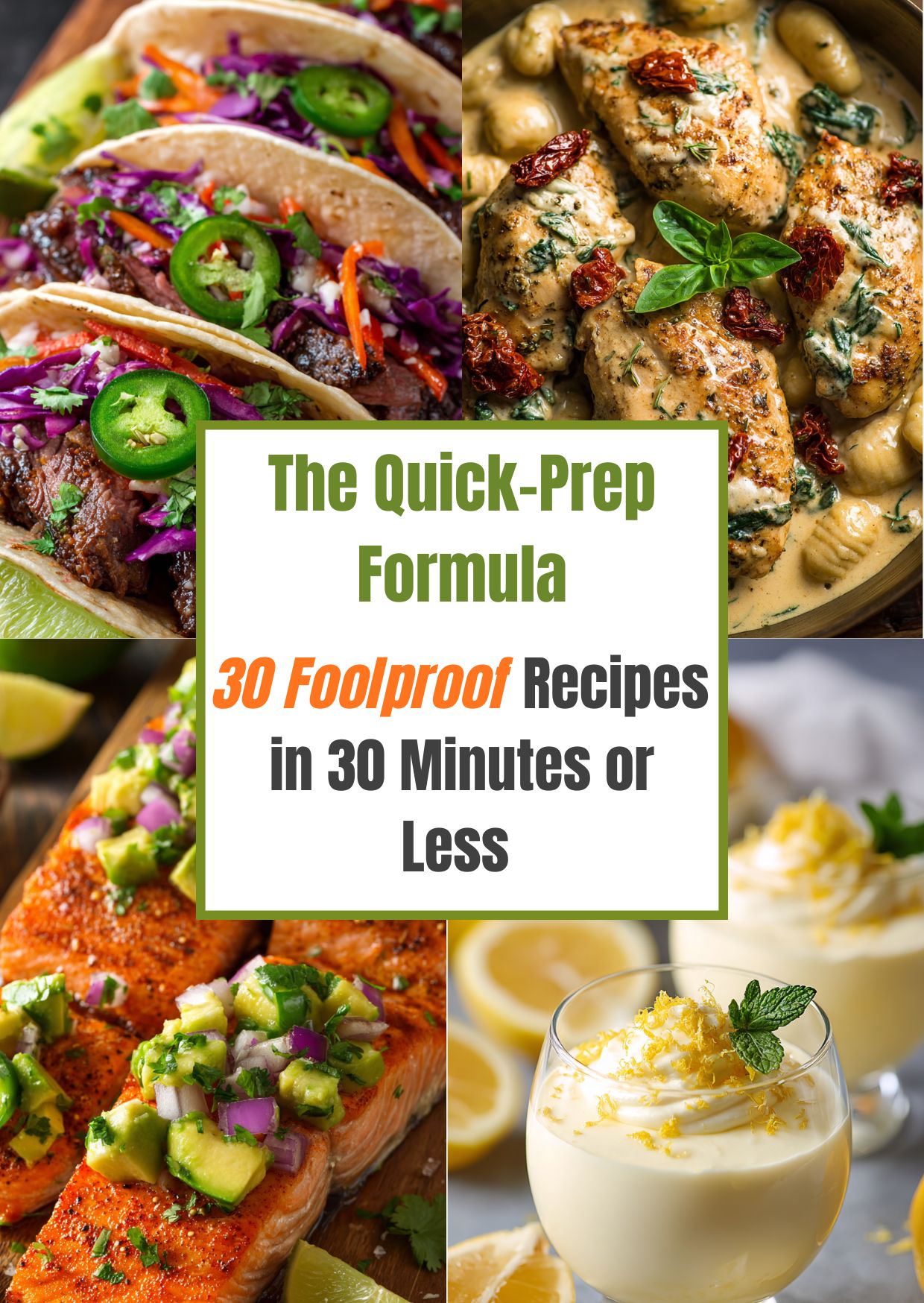 Tired of the 5 PM dinner panic? Grab my new 30-Minute Cookbook!